

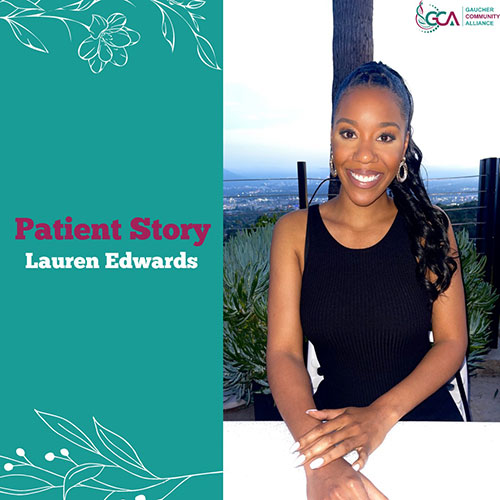
I was diagnosed with Type 1 Gaucher Disease (GD) at age 18, right before I started college. I began enzyme replacement therapy immediately, receiving infusions every two weeks throughout all four years of my undergrad schooling. I kept quiet about the condition during those years. Finally, I decided to open up about my GD and seek community when I started graduate school the following year. I chose to research GD for my graduate capstone project, and that moment changed my life for the better! Since then, I’ve connected with Gaucher patients from around the world, created an online platform where patients and families can share their experiences, shared my story with numerous websites and publications, worked closely with national and international Gaucher and rare disease organizations, and now I am a proud member of the board of directors for the Gaucher Community Alliance.
One of the most important things that I’ve learned since my diagnosis is that, as individuals living with GD, we each have unique experiences with the condition. From the specific type of GD we have, to the nature of the pain we endure, the type of treatment we receive, and even the manner in which we were diagnosed, it all varies depending on the person! However, despite the diverse ways that we can experience GD, one of the best aspects is having a network of people who truly understand what you’re going through and always offer their unwavering support.
GD was once a condition that I dealt with alone, but my world has expanded since opening up about it. In fact, what I find truly remarkable about living with GD is the sense of community it fosters. I’ve made amazing friends and have even gotten to travel (including internationally) to meet and network with other patients, caregivers and doctors. Even though living with GD isn’t easy, I am so grateful to have the support of my family, care team and organizations like GCA.
I am honored to serve on the GCA board and look forward to continuing my advocacy and support for individuals and families affected by GD.


